Tokenization Infrastructure
Share

WA
CEO & Editor-in-Chief


The ADI Foundation is fast becoming one of the most closely watched entities in global digital infrastructure for the scope, speed, and precision of what it is constructing.
When First Abu Dhabi Bank (FAB), ADQ, and International Holding Company (IHC) announced in April 2025 their plan to issue an AED-backed stablecoin ,it marked a significant step for the UAE’s financial landscape. Yet insiders now understand that the stablecoin is only one part of a broader mission: the development of ADI Chain, a blockchain network designed to anchor the UAE’s vision for regulated, scalable, and interconnected digital infrastructure.
Founded by Sirius International Holding, the digital arm of IHC, the ADI Foundation carries a clear mandate — to bring one billion people on-chain by 2030. But its distinctiveness lies not in the ambition itself, but in the velocity with which it executes it.
Within IHC’s ecosystem, time functions differently. What takes months elsewhere can take days here. Supported by IHC’s institutional reach, Sirius’s operational culture, and Abu Dhabi’s long-term governance mindset, ADI Foundation approaches blockchain not as a speculative opportunity but as an infrastructure imperative.
This is not a startup in search of direction. It is a foundation moving at the rhythm of an existing global ecosystem that spans finance, energy, logistics, healthcare, and technology — giving it a potential user base before a public launch even begins.
At the center of this initiative lies ADI Chain — a compliance-native, institution-grade blockchain designed to support real-world systems rather than isolated pilots. According to its public documentation, ADI Chain’s architecture leverages zero-knowledge rollups for scalability, combined with Ethereum compatibility to ensure openness and interoperability.
Its testnet is already live, marking an early validation of the infrastructure’s readiness. From tokenized financial assets and digital identity frameworks to supply chain registries and national payment systems, the network is engineered to serve institutions that need secure, auditable, and compliant rails — not speculative trading environments.
For ADI Foundation, the blockchain era has shifted from experimentation to execution. The question now is not whether blockchain works, but how well it integrates into the world’s economic infrastructure.
The ADI Foundation’s regulatory alignment gives it a unique edge in the regional and global landscape.
It is licensed under ADGM’s DLT Foundations regime, its AED-backed stablecoin has received in-principle approval from the UAE Central Bank, and it is expected to work with VARA as its ecosystem matures — particularly across areas such as custody, broker-dealer services, and token issuance at a later stage.
This multi-jurisdiction alignment is not cosmetic , it’s structural. Its governance model aligns with international compliance standards. While ADI Foundation itself is not a Virtual Asset Service Provider (VASP) under FATF or ADGM definitions, it provides the infrastructure for regulated institutions to build and operate on-chain. Ecosystem partners such as exchanges, custodians, or payment platforms on ADI Chain are required to comply with FATF Travel Rule and ADGM regulations, with the foundation offering technical tools and guidance to support such compliance.

Disclaimer of Warranty
The information provided in this article is for general informational purposes only. We make no warranties about the completeness, reliability, and accuracy of this information. Read full disclaimer
Rather than a permissioned system, ADI Chain positions itself as a regulated yet open network — one that invites institutions to innovate confidently, under frameworks that regulators can understand and oversee.
But even with the advantages of scale and regulatory support, the path ahead for ADI Foundation is neither simple nor guaranteed.
The challenges are both technical and systemic.
To fulfill its institutional promise, ADI Chain must connect seamlessly with global blockchain ecosystems. The question is not whether it can function — its testnet already does — but how efficiently it can interact with other networks and stablecoins to enable on-chain swap functionality and cross-chain liquidity. Without this, adoption risks remaining local rather than global.
The foundation’s utility token will be pivotal in defining the network’s economic model. Its structure, distribution, and on-chain incentives will determine whether developers and users find sustainable value in participating — or whether the token remains purely operational. Designing a credible, transparent model that aligns with institutional expectations while encouraging developer participation will be critical.
The next major challenge lies in the readiness of the data sets from the institutions and entities that will onboard to the ecosystem. For ADI Chain to deliver at the same pace it is being built, partner organizations must already be digitizing and structuring their internal data layers. Without this groundwork, the process of connecting real-world systems to blockchain infrastructure will slow — making it harder to “bend time” at the scale Sirius and IHC envision.
Operating across the UAE’s multiple regulatory ecosystems — the Central Bank, ADGM, SCA and VARA — is itself a balancing act. Each has its mandates and definitions of digital assets. Aligning those frameworks into a unified operational model for ADI Chain may prove as complex as building the technology itself. It is a reflection of both the UAE’s federal structure and its ongoing evolution toward coordinated digital asset governance.
What makes ADI Chain distinctive is not the promise of future adoption — it’s that adoption already exists in potential form.
Being born from within IHC’s vast ecosystem — which has a footprint in finance, energy, real estate, healthcare, and logistics — gives the chain a built-in network effect few new blockchains possess.
This unique advantage means that ADI Chain’s challenge is not about finding users but about connecting systems. The question isn’t who will use it, but how well it will connect to the wider digital economy.
ADI Foundation’s story isn’t about speed for its own sake. It’s about precision at scale — and building infrastructure that lasts.
The UAE has proven itself capable of designing regulatory clarity faster than most countries. Now, ADI Foundation is testing whether that clarity can translate into technology that competes globally.
The coming phase will determine whether ADI Chain can evolve from a well-engineered system into a living financial network — one capable of bridging compliance with creativity, regulation with reach, and ambition with trust.
In that race, ADI Foundation isn’t chasing time — it’s redefining how time is measured in building the future of digital finance.

Editor's Picks
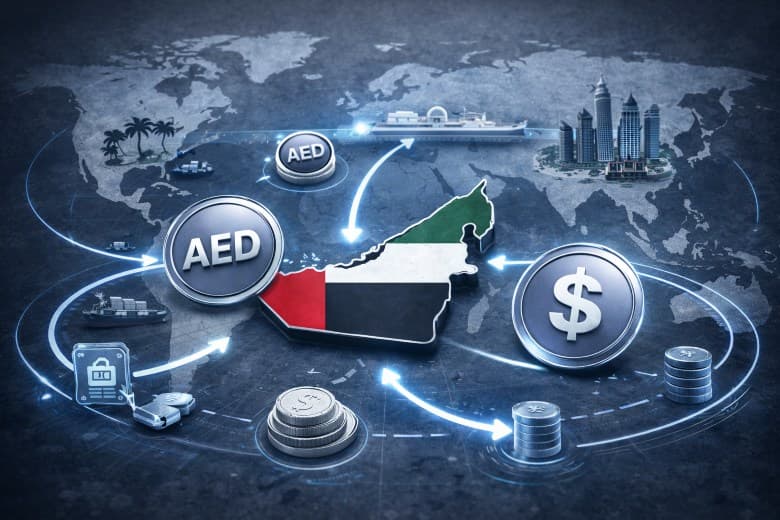
UAE Stablecoins: Why They Are Built to Travel, Not Stay Local

Walid Abou Zaki

Feb 28, 2026

8 min

The Central Bank of the UAE Clearing the Noise Around Article 62
Walid Abou Zaki
Feb 25, 2026
5 min

Europe’s Crypto Purge: Did Lithuania Just Kick Out Innovation — and is the UAE the Beneficiary?
Salma Naueihed
Feb 18, 2026
7 min
Read More Articles

In the Same Space
VARA Issues Alert Against MEXC Over Unlicensed Activity
News Desk
Mar 6, 2026
2 min
UAE Stablecoins: Why They Are Built to Travel, Not Stay Local
Walid Abou Zaki
Feb 28, 2026
8 min

OCC Faces Scrutiny from Elizabeth Warren Over Trump-Linked Crypto Bank Bid
News Desk
Feb 27, 2026
3 min

Dubai Taxi Eyes Crypto Gateway Amid UAE Stablecoin Push
News Desk
Feb 26, 2026
2 min