Regulation & Policy
Share
It is now expected that the Financial Action Task Force (FATF) will announce, at the end of its annual meeting, which begins today in Paris and continues until the 24th of this month, the removal of the United Arab Emirates from the enhanced follow-up stage, commonly known as the grey list, in the areas of combating money laundering and terrorist financing, where the UAE has been placed since 2020.
This announcement will be the result of concerted efforts by the UAE to develop and enhance a comprehensive and effective system to combat money laundering and terrorist financing in accordance with FATF standards.
This decision confirms, upon its announcement, that the UAE has fulfilled the specific requirements outlined in the action plan proposed by the FATF following the mutual evaluation report in 2020.
This demonstrates the UAE's commitment to the FATF's forty recommendations, the industry's benchmark standards, and showcases the effectiveness of its system in combating money laundering and terrorist financing, assessed through the FATF's 12 criteria.

Disclaimer of Warranty
The information provided in this article is for general informational purposes only. We make no warranties about the completeness, reliability, and accuracy of this information. Read full disclaimer
While the recommendations focus on assessing the anti-money laundering system in terms of laws, regulations, institutions, and procedures, the evaluation of the system's effectiveness concentrates on its legal and institutional frameworks and its ability to achieve desired outcomes.
The FATF's decision will affirm the progress made in combating financial crimes and the maturity reached by the system developed by the UAE through comprehensive participation at both federal and local levels from all relevant entities, including ministries, authorities, regulatory bodies, courts, and others. This participation enhances the development of legal and enforcement frameworks, capacity building, international judicial agreements, and partnership with the private sector.
Following the exit from the grey list, UAE's efforts are expected to focus on enhancing the current system and ensuring its effective functioning in combating financial crimes. Additionally, a new action strategy for the period from 2024 to 2027 will be devised, along with preparations for the next evaluation by the FATF for the UAE in 2026.
The UAE is considered a global hub for trade, finance, logistics, tourism, witnessing significant growth over the past two decades. It hosts more than 62 licensed banks under the Central Bank, housing two global financial centers - the Dubai International Financial Centre and the Abu Dhabi Global Market, which accommodate hundreds of international financial institutions. Moreover, the UAE is one of the largest re-export markets in the world.
It is worth mentioning that the FATF was established in 1989 by the Group of Seven to develop procedures and standards for combating money laundering and terrorist financing. It comprises 39 members, including the European Union and the Gulf Cooperation Council, in addition to 9 regional groups and observer members such as United Nations organizations, the International Monetary Fund, the World Bank, among others.



Editor's Picks
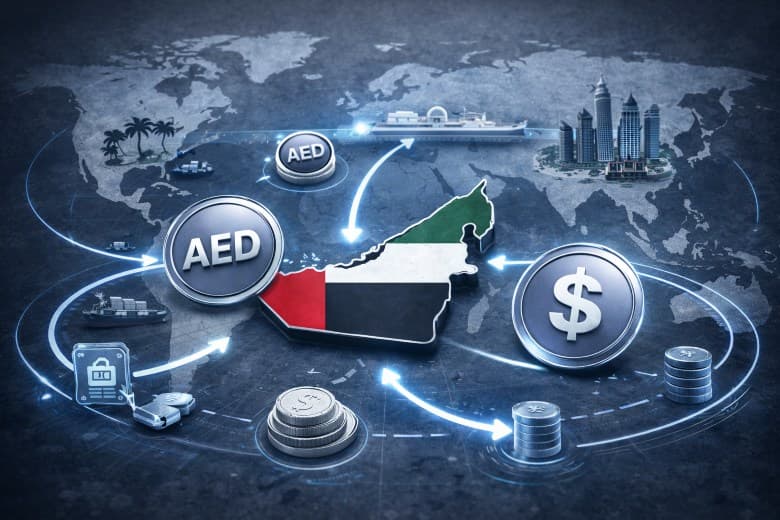
UAE Stablecoins: Why They Are Built to Travel, Not Stay Local

Walid Abou Zaki

Feb 28, 2026

8 min

The Central Bank of the UAE Clearing the Noise Around Article 62
Walid Abou Zaki
Feb 25, 2026
5 min

Europe’s Crypto Purge: Did Lithuania Just Kick Out Innovation — and is the UAE the Beneficiary?
Salma Naueihed
Feb 18, 2026
7 min
Read More Articles

In the Same Space
UAE Stablecoins: Why They Are Built to Travel, Not Stay Local
Walid Abou Zaki
Feb 28, 2026
8 min

Dubai Taxi Eyes Crypto Gateway Amid UAE Stablecoin Push
News Desk
Feb 26, 2026
2 min
SEC and CFTC Sign Coordination Pact to Align Crypto and Financial Market Oversight
News Desk
Mar 12, 2026
4 min
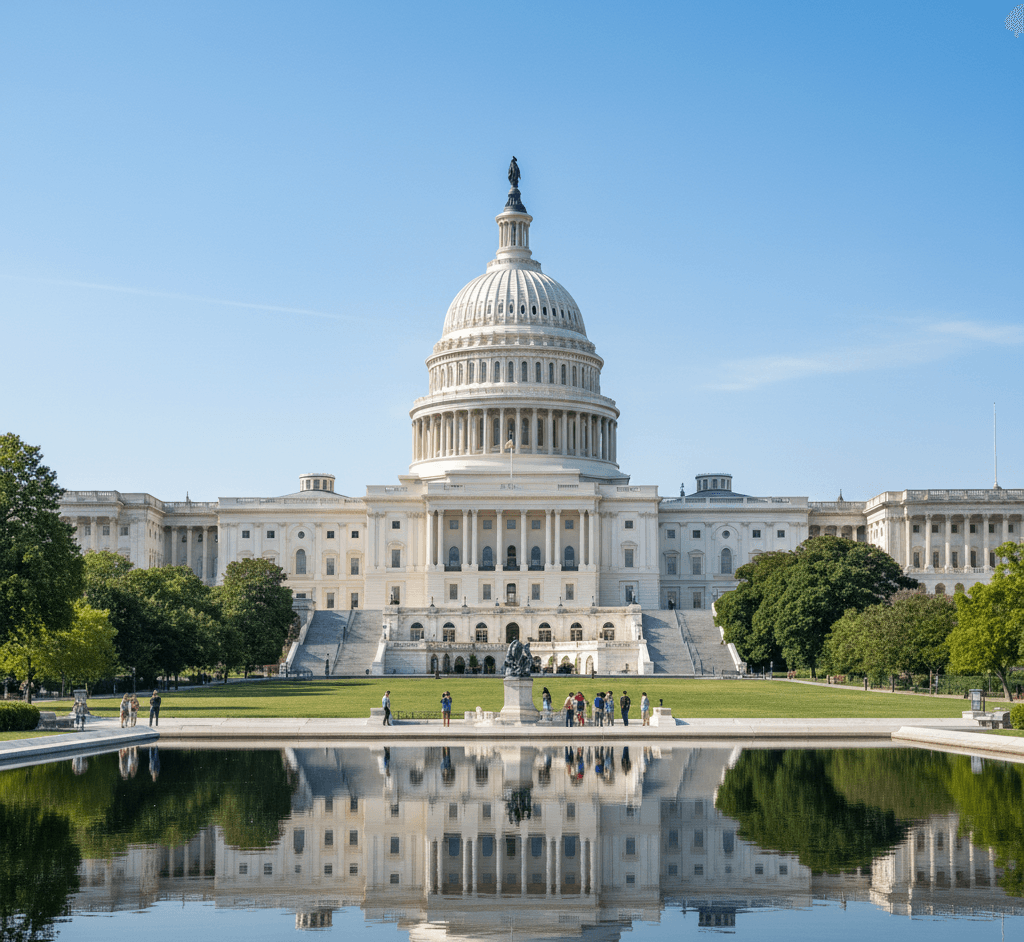
U.S. Senators Negotiate Stablecoin Rewards Compromise in Market Structure Bill
News Desk
Mar 11, 2026
4 min