Stablecoins & Payments
Share
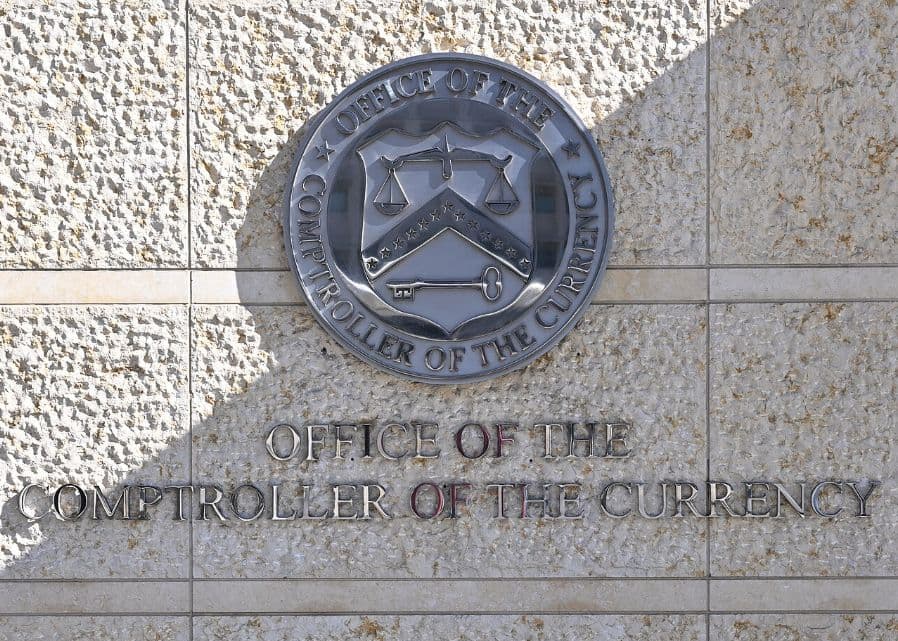
Circle, the issuer of the USDC stablecoin, has applied for a national trust bank charter with the US Office of the Comptroller of the Currency (OCC), a strategic expansion beyond its core stablecoin business.
The application comes just days after Circle’s blockbuster IPO, which valued the company at nearly $18 billion.
As previously reported by Unlock Blockchain, Circle’s Wall Street debut was met with optimism over its dominant USDC position, yet analysts such as JPMorgan issued an “underweight” rating, warning of a valuation that may be difficult to justify without significant growth in new business lines.
If approved, the trust bank charter would establish First National Digital Currency Bank, N.A., a federally regulated entity that will allow Circle to directly custody its own USDC reserves, which are currently held by BNY Mellon and managed by BlackRock.
More importantly, it will enable Circle to offer custody services for tokenized traditional assets, including stocks, bonds, and real-world assets, targeting institutional clients.

Disclaimer of Warranty
The information provided in this article is for general informational purposes only. We make no warranties about the completeness, reliability, and accuracy of this information. Read full disclaimer
However, the license does not grant Circle the ability to take deposits or issue loans, restricting its operations to trust and custody services under federal oversight.
This move aligns with Circle’s ambition to build what it previously described as a “$1 trillion network strategy”, integrating stablecoins, tokenized assets, and compliance-driven infrastructure to support the future of financial markets on-chain.
Beyond regulatory credibility, the license would strengthen Circle’s competitive positioning. While other stablecoin issuers such as Tether remain offshore and outside US federal regulatory frameworks, Circle is building itself as the “compliant face of stablecoins”, a strategy that could prove essential as Congress advances new stablecoin legislation such as the GENIUS Act.
Circle’s evolution from a stablecoin issuer to a regulated financial infrastructure provider places it in direct competition with firms like Anchorage Digital and traditional banks exploring digital asset custody. Analysts believe that Circle’s broader diversification into custody and tokenized markets will be key to sustaining its lofty valuation while navigating market volatility and rising competition.
As Circle deepens its integration with traditional finance, questions remain around how quickly institutional adoption of tokenized assets will materialize, and whether Circle can maintain its leadership in an increasingly crowded stablecoin market.
What do you think about Circle’s banking ambitions? Will its regulated approach set a new standard for stablecoin issuers worldwide?





Editor's Picks
UAE Stablecoins: Why They Are Built to Travel, Not Stay Local

Walid Abou Zaki

Feb 28, 2026

8 min

The Central Bank of the UAE Clearing the Noise Around Article 62
Walid Abou Zaki
Feb 25, 2026
5 min

Europe’s Crypto Purge: Did Lithuania Just Kick Out Innovation — and is the UAE the Beneficiary?
Salma Naueihed
Feb 18, 2026
7 min
Read More Articles

In the Same Space

Dubai Taxi Eyes Crypto Gateway Amid UAE Stablecoin Push
News Desk
Feb 26, 2026
2 min
OCC Seeks Feedback on GENIUS Act Stablecoin Proposal
News Desk
Feb 26, 2026
2 min

Revolut Begins UK Pound Stablecoin Testing in FCA Sandbox
News Desk
Feb 26, 2026
2 min
U.S. Senators Negotiate Stablecoin Rewards Compromise in Market Structure Bill
News Desk
Mar 11, 2026
4 min


