Regulation & Policy
Share
WA
CEO & Editor-in-Chief


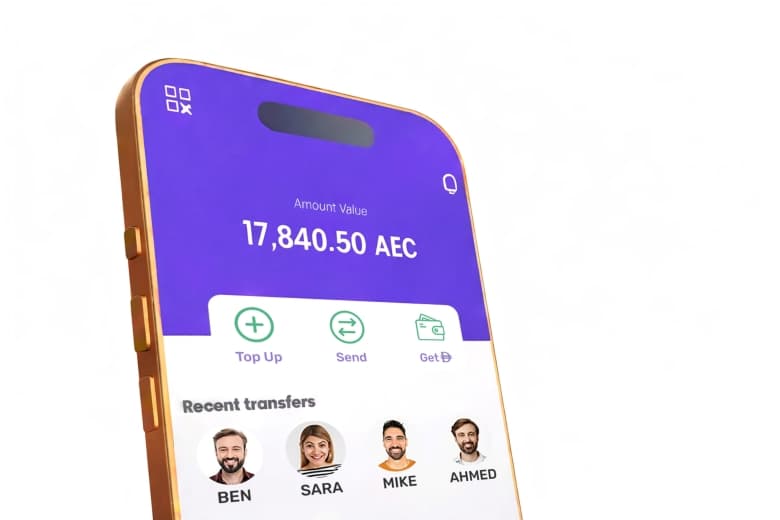
The Central Bank of the UAE has approved a new payment flow that, for the first time, allows users to convert crypto to dirham value directly inside a licensed UAE wallet and spend it across the national payment network.
The approval enables AEC Wallet to reload AE Coin balances through regulated crypto settlement, turning digital assets into dirhams and making them usable on POS terminals across the country — end-to-end, under Central Bank oversight.
This is not a pilot, nor a sandbox exemption.
It is a fully permitted payment use case operating inside the UAE’s regulated financial system.
The flow brings together four regulated entities, each operating strictly within its licensed mandate.
MBank, a Central Bank–licensed local digital bank, sits at the core of the structure through its ownership of AED StableCoin LLC, the issuer of AE Coin, the UAE’s first dirham-backed stablecoin licensed under the payment token framework.
Crypto settlement is handled by Emirates Coin Investment, a CMA-licensed virtual asset firm authorized to onboard crypto users, manage digital asset risk, and convert crypto into AED value.
Once settled, that value is loaded into AEC Wallet as AE Coin, where it becomes spendable like any regulated payment instrument across the UAE’s existing POS infrastructure.
Each entity performs a distinct role.
None crosses into activities it is not licensed to perform.
That separation is not cosmetic — it is the reason this approval exists.
Until now, crypto and payments in the UAE largely operated side by side.
Crypto platforms allowed trading and custody.
Banks and wallets handled dirhams.
What this approval introduces is continuity.
Crypto assets can now be settled, converted into AED, issued as a licensed stablecoin, and spent — without leaving the regulated perimeter.
Not through offshore routing. Not through experimental wrappers. But through a wallet operating under Central Bank payment rules.
That distinction turns crypto from an external asset class into a source of usable liquidity inside the formal economy.
This approval also clarifies something that has often been misunderstood.
Regulatory Approval

Disclaimer of Warranty
The information provided in this article is for general informational purposes only. We make no warranties about the completeness, reliability, and accuracy of this information. Read full disclaimer
MBank did not approach digital assets by launching isolated products. It assembled an ecosystem — long before all the pieces were activated.
Alongside AE Coin and AEC Wallet, the group includes Changer.ae, a regulated digital custody platform, completing the institutional stack from custody to settlement, issuance, and spending.
Each component was licensed separately. Each was built conservatively. Each looked incomplete on its own.
This week’s approval shows why.
The group was not waiting to launch features. It was waiting for the moment when all components could connect without regulatory friction.
Commenting on the approval, Mohammad Wassim Khayata, CEO of MBank, described the development as a turning point for regulated digital payments in the UAE, emphasizing that it enables AE Coin to be used securely and efficiently for everyday transactions while remaining fully aligned with Central Bank requirements.
From the stablecoin side, Ramez Rafeek, General Manager of AE Coin , framed the approval as a practical expansion of AE Coin’s role — moving it from a licensed instrument to a payment token actively used across both public and private sectors.
Taken together, the messages point to a shared objective: making digital assets usable without weakening regulatory discipline.
More UAE-approved stablecoins are expected to launch in the coming period.
Many will be built on open blockchains, optimized for speed, composability, and broader crypto market integration.
AE Coin’s positioning is different.
It was designed as a payment endpoint, not a trading asset. Its role is not to compete for on-chain liquidity, but to serve as a regulated destination where value can safely enter the payments system.
The ability to reload AE Coin through crypto settlement does not change that role.
It reinforces it.
Crypto enters.
Dirhams are issued.
Payments happen.
This approval matters because it solves a problem regulators have been cautious about for years:
how to allow crypto to become spendable money inside the system, not around it.
By approving crypto-to-dirham conversion inside a licensed wallet, the Central Bank is signaling that integration — when done with clear role separation and supervision — is preferable to exclusion.
For MBank and its ecosystem, this is not the launch of a product.
It is the activation of an architecture built to absorb digital assets without destabilizing the financial system.
In regulated finance, that is how lasting infrastructure emerges — quietly, incrementally, and with intent.




Editor's Picks
UAE Stablecoins: Why They Are Built to Travel, Not Stay Local

Walid Abou Zaki

Feb 28, 2026

8 min

The Central Bank of the UAE Clearing the Noise Around Article 62
Walid Abou Zaki
Feb 25, 2026
5 min

Europe’s Crypto Purge: Did Lithuania Just Kick Out Innovation — and is the UAE the Beneficiary?
Salma Naueihed
Feb 18, 2026
7 min
Read More Articles

In the Same Space

U.S. Senators Negotiate Stablecoin Rewards Compromise in Market Structure Bill
News Desk
Mar 11, 2026
4 min

CFTC Signals Imminent Launch of U.S. Crypto-Linked Perpetual Futures
Salma Naueihed
Mar 4, 2026
3 min

Turkey Proposes 10 Percent Crypto Income Tax as Part of Major Regulatory Overhaul
News Desk
Mar 3, 2026
2 min

Senate Housing Bill Adds Temporary CBDC Ban Through 2030
News Desk
Mar 3, 2026
2 min

