Exchanges & Trading
Share
SN
Senior English Editor


When the Dubai Virtual Assets Regulatory Authority (VARA) approved the region’s first pilot for retail crypto derivatives in the UAE, launched in partnership with OKX, it marked a turning point in the country’s digital asset journey. For the first time, everyday traders in Dubai gained regulated access to futures and perpetuals — instruments long confined to institutional desks or offshore exchanges.
But while the milestone attracted attention, it also raised a deeper question: why did VARA introduce a pilot at all? The answer lies in balancing opportunity with responsibility — ensuring that retail traders understand what they are getting into before a full rollout takes place.
Unlike spot trading, where users simply buy and sell assets at market prices, derivatives allow traders to speculate on price movements without owning the underlying asset. They can hedge against volatility, diversify risk, or amplify positions using leverage.
For retail traders, this represents a significant shift. Derivatives can democratize tools once reserved for professionals, but they can also expose inexperienced investors to amplified risks. This duality is exactly why the UAE has chosen a measured and monitored approach rather than opening the floodgates.
Globally, retail derivatives have often been controversial. Unregulated platforms frequently offered 50x or even 100x leverage — a recipe for rapid liquidations and mistrust. VARA’s pilot is designed to avoid repeating those mistakes.
By capping leverage at 5x, requiring educational checks, and monitoring trading behavior in real time, VARA is using the pilot to gather critical insights:
The outcome of the pilot will help shape a long-term regulatory model, one that allows innovation while keeping retail participation sustainable.
The reality is that most retail traders in MENA — and globally — still view crypto through a spot-trading lens. Derivatives require an entirely different mindset, one that includes understanding margin mechanics, funding rates, liquidation triggers, and risk management tools.
If Bitcoin rises by 10% (from $121,000 to about $133,100):
Piloting
Regulatory Approval

Disclaimer of Warranty
The information provided in this article is for general informational purposes only. We make no warranties about the completeness, reliability, and accuracy of this information. Read full disclaimer
If Bitcoin falls by 10% (from $121,000 to about $108,900):
Liquidation risk:
This simple scenario shows why education is critical: leverage can turn a 10% market move into a 50% gain — or a 50% loss. And with a slightly bigger drop, the entire position is liquidated.
Without proper awareness, derivatives can easily become a speculative trap. Traders may chase leverage without realizing how quickly it magnifies losses. The challenge is not the products themselves, but the knowledge gap.
This is where OKX, a trusted global exchange, plays a critical role. Instead of focusing solely on market entry, the exchange has chosen to prioritize education as part of the pilot rollout.
“Education and awareness are essential to the healthy growth of the crypto industry. They help dispel misconceptions and reduce the stigma that has often surrounded digital assets. Our commitment to customer safety and security is absolute, and education plays a vital role in reinforcing that. When users understand how to navigate platforms, interact with apps, and trade responsibly, the entire ecosystem becomes more transparent, secure, and accessible,” said Rifad Mahasneh, CEO of OKX MENA.
In practice, this means OKX requires users to complete tutorials, platform walkthroughs, and risk assessments before opening positions. Multi-language resources — including Arabic — aim to ensure inclusivity, while educational content emphasizes responsible trading rather than high-risk speculation.
The UAE’s retail derivatives experiment is not about chasing trading volumes. Instead, it is a test of whether regulation plus education can create a safer, more sustainable environment for retail traders.
If successful, the pilot could become a global benchmark: proof that with the right safeguards, retail traders can access sophisticated financial tools without repeating the failures of unregulated markets.
The real measure of success will not be the number of contracts traded, but whether users emerge from the pilot more informed, more cautious, and more confident in participating responsibly.Derivatives in the UAE are more than a new product launch — they are a live experiment in balancing innovation with accountability. By insisting on education first, VARA and OKX are signaling that the country intends to chart a different path: one where retail participation grows on a foundation of knowledge, not hype.



Editor's Picks
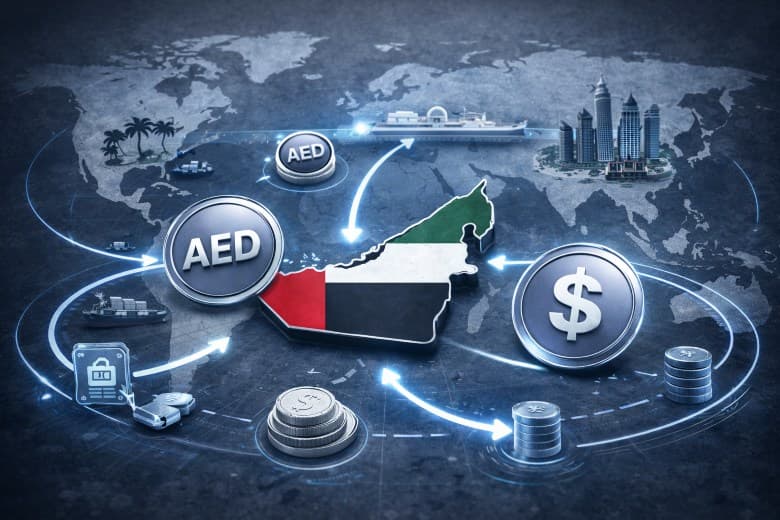
UAE Stablecoins: Why They Are Built to Travel, Not Stay Local

Walid Abou Zaki

Feb 28, 2026

8 min

The Central Bank of the UAE Clearing the Noise Around Article 62
Walid Abou Zaki
Feb 25, 2026
5 min
Europe’s Crypto Purge: Did Lithuania Just Kick Out Innovation — and is the UAE the Beneficiary?
Salma Naueihed
Feb 18, 2026
7 min
Read More Articles

In the Same Space
OCC Faces Scrutiny from Elizabeth Warren Over Trump-Linked Crypto Bank Bid
News Desk
Feb 27, 2026
3 min

Dubai Taxi Eyes Crypto Gateway Amid UAE Stablecoin Push
News Desk
Feb 26, 2026
2 min

Bitcoin and Ethereum Struggle as Oil Spike and ETF Flows Rattle Crypto Markets
News Desk
Mar 9, 2026
4 min
VARA Issues Alert Against MEXC Over Unlicensed Activity
News Desk
Mar 6, 2026
2 min

