Stablecoins & Payments
Share
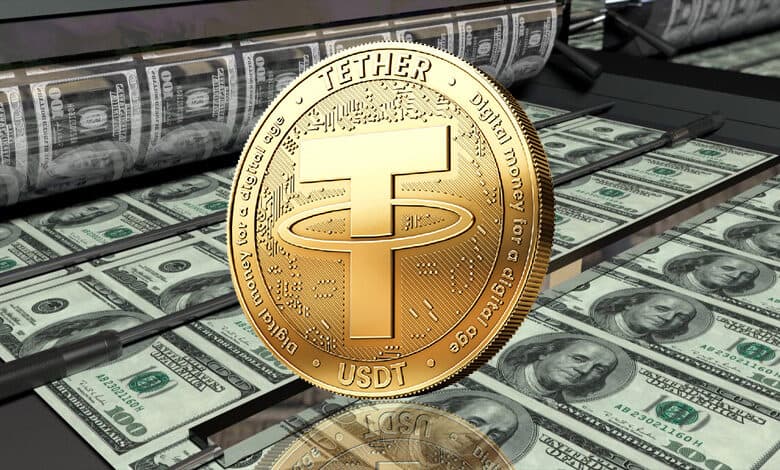
Stablecoins, despite their claimed convertibility to real-world currencies, do not serve as "safe havens" against crypto or financial shocks, according to a working paper from the European Central Bank (ECB) published on October 7.
The ECB paper titled "Stablecoins, Money Market Funds, and Monetary Policy," explores the response of stablecoins and MMFs to various market "shocks," aiming to understand how these assets react to different variables.
The ECB paper highlights that stablecoins' balance sheets closely resemble those of money market funds (MMFs), consisting of short-term liquid assets like U.S. Treasuries, high-quality commercial paper, and bank deposits. During market stress, stablecoins exhibit flight-to-quality dynamics, with high-quality stablecoins receiving inflows at the expense of lower-quality ones, much like MMFs during past financial crises. Yet, on the aggregate, the paper finds no significant inflows into stablecoins during major crypto events, raising doubts about their effectiveness as safe havens.

Disclaimer of Warranty
The information provided in this article is for general informational purposes only. We make no warranties about the completeness, reliability, and accuracy of this information. Read full disclaimer
The study found that while stablecoins showed little reaction to shocks in the crypto market, money market funds experienced a significant negative impact, with market capitalization dropping by up to 4%. However, the effects of U.S. monetary policy tightening were more pronounced and opposite for the two asset types. Money market funds saw increased inflows, while bank deposits fell, benefiting from the policy changes. In contrast, stablecoins suffered, with their market capitalization shrinking by up to 10%, particularly for major stablecoins like Tether’s USDT and Circle’s USDC.
The authors concluded that the role of stablecoins as a safe haven is questionable, as their resilience does not extend to shocks in either the crypto or traditional financial markets. Investors tend to shift to more traditional assets during contractionary monetary policy changes. The report further challenged the uncorrelation claims of these assets, asserting that “dollar monetary policy acts as the key nexus between traditional and crypto markets.”




Editor's Picks
UAE Stablecoins: Why They Are Built to Travel, Not Stay Local

Walid Abou Zaki

Feb 28, 2026

8 min

The Central Bank of the UAE Clearing the Noise Around Article 62
Walid Abou Zaki
Feb 25, 2026
5 min

Europe’s Crypto Purge: Did Lithuania Just Kick Out Innovation — and is the UAE the Beneficiary?
Salma Naueihed
Feb 18, 2026
7 min
Read More Articles

In the Same Space

Dubai Taxi Eyes Crypto Gateway Amid UAE Stablecoin Push
News Desk
Feb 26, 2026
2 min
OCC Seeks Feedback on GENIUS Act Stablecoin Proposal
News Desk
Feb 26, 2026
2 min

Revolut Begins UK Pound Stablecoin Testing in FCA Sandbox
News Desk
Feb 26, 2026
2 min

U.S. Senators Negotiate Stablecoin Rewards Compromise in Market Structure Bill
News Desk
Mar 11, 2026
4 min