Web3 & Development
Share

3I
Content Writer


With so much talk surrounding the metaverse these days, you would think that this was an overnight development that recently exploded on the blockchain and within society at large. But the truth is that the metaverse has its roots in a popular videogame that introduced itself to the world way back in 2003. That game is called Second Life.
Linden Lab CEO Philip Rosedale’s vision for the game at the time was to give players a chance to live out their desire for escapism. They could be anyone they wanted to be, and live a completely different life separate from their reality. Second Life users or “residents” could create and customize their own avatars, meet other residents, socialize, build, create and trade virtual property and services with one another.
The game took some of its mechanics from The Sims, but it was a little more involved in terms of allowing you to create a fantasy life and a fantasy avatar to represent who you really are. The game is so influential that it was the subject of the book “The Making of Second Life: Notes from the New World” by Wagner James Au, in which the author delves into how the game built a base of more than a million active user and essentially created its own economy, culture and social norms.
The truth is the metaverse is impacting our current reality thanks to the precedence set by old games such as Second Life
Now that you know that, consider how putting this experience on the blockchain is impacting us now, and why it’s going to be a big part of the future.
Meta (formerly known as Facebook) is seeing its share price take a nosedive this year. Estimates suggest the company is worth $232 billion less now. The dip in the company’s share price can partly be attributed to the state of the economy, but it arguably has much more to do with Meta’s rebranding and long-term investment in the metaverse.

Disclaimer of Warranty
The information provided in this article is for general informational purposes only. We make no warranties about the completeness, reliability, and accuracy of this information. Read full disclaimer
Is it a good play to try and become the biggest player in the metaverse if you run a platform that has billions of users? Of course. Is it going to happen fast enough to make your shareholders happy in the short term? Probably not.
That said, whether a centralized platform like Meta succeeds, in the long run, is irrelevant to blockchain and crypto enthusiasts. Today, metaverse projects are ripe with offering the same benefits as a classic game like Second Life while tying in all of the benefits associated with blockchains, cryptocurrencies, and NFTs.
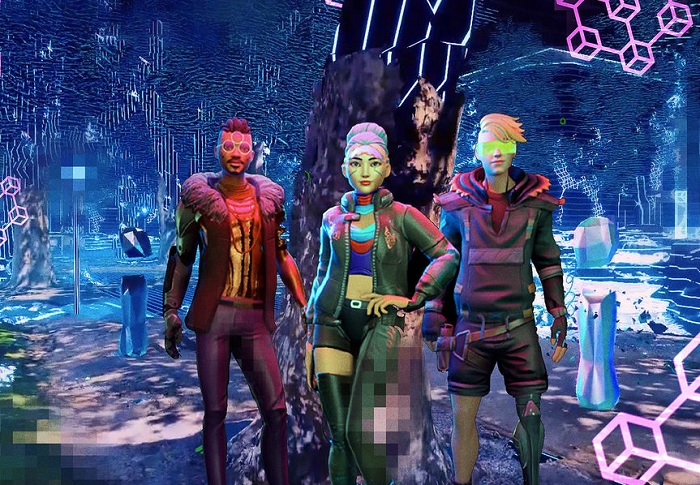
Meta’s interest in the blockchain is clearly not just about revenue. It’s also about brand extension. The next generation of Meta users is going to be more enthusiastic about living in a virtual world than they are about posting their thoughts, feelings, or food pictures on somebody’s ‘wall’.
As you may know, the true blockchain and crypto purists aren’t going to want to live vicariously through Meta’s platform as much as they might want to live in Decentraland, Cryptovoxels, or whatever decentralized metaverse platform is going to be the world’s top player a decade from now.
Meta likely isn’t going to be as focused on developing digital assets such as NFTs that are going to earn revenue for you. Secondly, as much as they might be more focused on your privacy than the company ever has been before, they likely aren’t going to give you the total privacy that a blockchain affords.
What’s most likely is that the future of the metaverse lies in the hands of blockchain projects and innovators that might not be famous or wealthy today, but that might allow us to feel famous and wealthy ourselves (because we can be whoever we want to be in a virtual world).

Editor's Picks

IMF Backs Tokenized Finance but Still Holds On to Legacy Control

Walid Abou Zaki

Apr 5, 2026

7 min

Franklin Templeton’s 250 Digital Deal Signals a Shift Toward Active Crypto Management
Walid Abou Zaki
Apr 1, 2026
5 min
VARA Introduces Virtual Asset Derivatives Framework As Dubai Deepens Market Maturity
Walid Abou Zaki
Mar 31, 2026
7 min
Read More Articles

In the Same Space
Goldman Sachs Files for Bitcoin Income ETF, What Does It Mean?
News Desk
Apr 15, 2026
3 min
Ethereum Doubles Down on Security With New $1M Developer Initiative
News Desk
Apr 15, 2026
3 min
Deutsche Börse Joins Institutional Shift With $200M Kraken Stake
Chantal Assi
Apr 14, 2026
3 min
Tether Moves Beyond Infrastructure to Reach Users Left Behind by Traditional Finance
News Desk
Apr 14, 2026
3 min