Regulation & Policy
Share
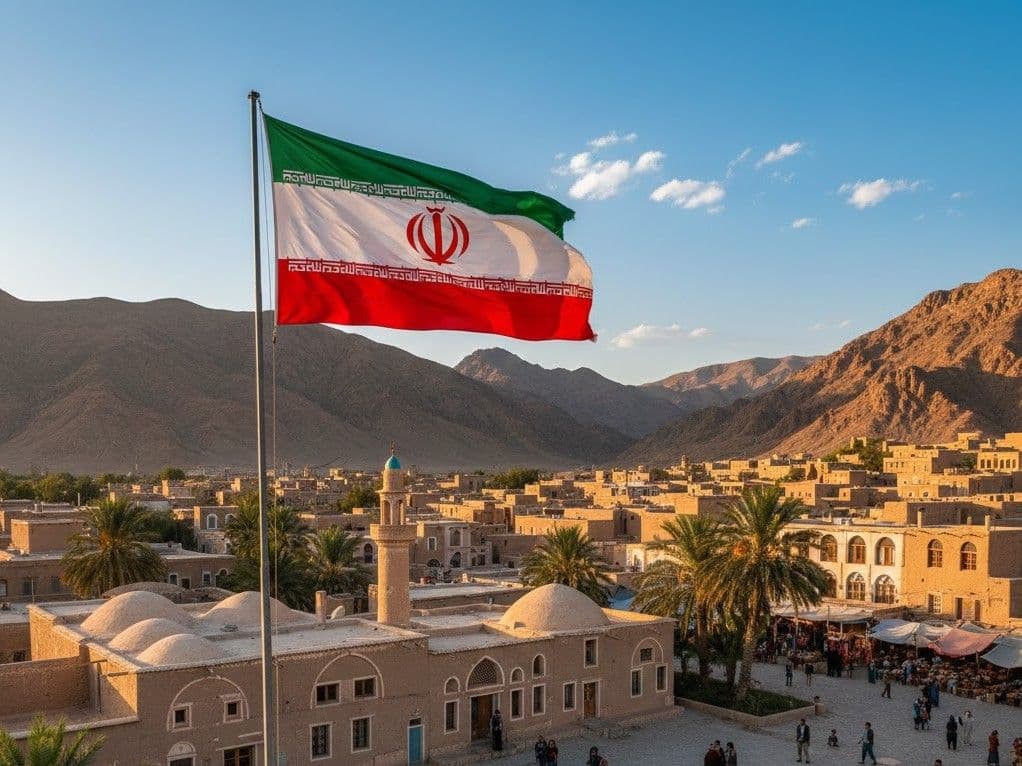
Iran is increasingly relying on cryptocurrency to transfer funds despite international sanctions. According to blockchain analytics firm Chainalysis, more than $3 billion in digital assets in 2025 were linked to networks associated with the Islamic Revolutionary Guard Corps (IRGC).
The findings highlight the growing role of digital assets in helping sanctioned entities move money outside traditional financial systems.
The data comes from Chainalysis’ 2026 Crypto Crime Report, which estimates that illicit cryptocurrency addresses received at least $154 billion in digital assets in 2025.
The firm noted that this represents a 162% increase compared with the previous year, indicating a sharp rise in crypto-related illicit activity worldwide.
Chainalysis also observed that Iran has continued incorporating cryptocurrency into its broader financial and geopolitical strategy.
"Iran continued integrating crypto into its strategic priorities and financing for proxies, even as the regime faced internal and external pressures not seen since the early days of the Islamic Republic", the report said.
According to the report, addresses connected to the IRGC accounted for more than half of the total value received by Iranian entities during the fourth quarter of 2025.
In total, more than $3 billion was transferred through these networks. The funds were reportedly used to support regional activities, facilitate oil sales, and acquire dual-use equipment with both civilian and military applications.
Blockchain data also captured notable activity following joint U.S. and Israeli airstrikes on Iran last weekend.
Roughly $10.3 million in cryptocurrency flowed out of Iranian exchanges shortly after the strikes. At the peak of activity, hourly outflows briefly approached $2 million, reflecting heightened market movement during the geopolitical escalation.
The conflict also triggered volatility in the cryptocurrency market.
Bitcoin initially dropped to $63,100 after early reports of the airstrikes led by the United States and Israel. However, the leading digital asset later rebounded to around $70,000 as investors reassessed the situation.
Prices continued climbing, with Bitcoin nearly reaching $74,000 on Wednesday, before easing over the past 24 hours to trade at just above $71,000.
Chainalysis estimates that Iran’s cryptocurrency market reached approximately $7.48 billion in 2025.

Disclaimer of Warranty
The information provided in this article is for general informational purposes only. We make no warranties about the completeness, reliability, and accuracy of this information. Read full disclaimer
While geopolitical developments have contributed to market volatility, analysts say the broader cryptocurrency ecosystem has also been affected by rising tensions in the region.
Despite short-term market reactions, the report suggests that a key objective behind these transactions remains the ongoing funding of external operations.
he increase in illicit cryptocurrency use is not limited to the Middle East. Chainalysis estimates that sanctioned countries accounted for $104 billion of the $154 billion in illicit crypto flows during 2025.
The firm noted that heavily sanctioned nations increasingly rely on digital assets to maintain international trade and financial operations.
“This analysis underscores how nation-states like Iran, facing strict sanctions on fiat transactions, have turned to crypto to support foreign trade and have developed sophisticated methods to obscure their blockchain activity,” Chainalysis said.
Outside the Middle East, Russia has been associated with large volumes of illicit cryptocurrency activity. The A7A5 ruble-backed stablecoin processed $93.3 billion in transactions in less than a year.
Meanwhile, two sanctioned Russian crypto exchanges, Grinex and Meer, handled $305 million and $4.76 billion in transactions respectively during 2025.
In Venezuela, cryptocurrency flows reached $44.6 billion last year. Chainalysis noted that many Venezuelans adopted crypto early as a way to protect their savings from hyperinflation and prolonged economic instability.
The report also highlighted the continued role of informal over-the-counter (OTC) brokers, who operate both physical shops and tailored services to help Venezuelans convert local currency into digital assets.
Some brokers have facilitated conversions of bolivars held in sanctioned Venezuelan banks into cryptocurrency, providing another pathway around financial restrictions.
North Korea remained one of the most significant sources of illicit cryptocurrency activity.
According to the report, state-backed hackers stole more than $2 billion worth of digital assets in 2025, making it the country’s largest year ever for cryptocurrency theft.
The report also identified substantial cryptocurrency flows connected to fraud and money laundering networks in Southeast Asia.
A sanctioned organization known as the Huione Group reportedly processed over $98 billion in cryptocurrency transactions between August 2021 and January 2025, highlighting the scale of illicit financial operations now occurring through digital assets.



Editor's Picks
UAE Stablecoins: Why They Are Built to Travel, Not Stay Local

Walid Abou Zaki

Feb 28, 2026

8 min

The Central Bank of the UAE Clearing the Noise Around Article 62
Walid Abou Zaki
Feb 25, 2026
5 min

Europe’s Crypto Purge: Did Lithuania Just Kick Out Innovation — and is the UAE the Beneficiary?
Salma Naueihed
Feb 18, 2026
7 min
Read More Articles

In the Same Space

Bitcoin and Ethereum Struggle as Oil Spike and ETF Flows Rattle Crypto Markets
News Desk
Mar 9, 2026
4 min

Iran Conflict Unlikely to Dent Bitcoin Mining Hashrate, Analysts Say
News Desk
Mar 3, 2026
3 min
Iran Crypto Outflows Surge 700 Percent After U.S. Israeli Strikes
News Desk
Mar 3, 2026
2 min

Bitcoin Falls Toward 65,000 Dollars Amid Middle East Tension
News Desk
Mar 2, 2026
3 min