Infrastructure
Share
WA
CEO & Editor-in-Chief


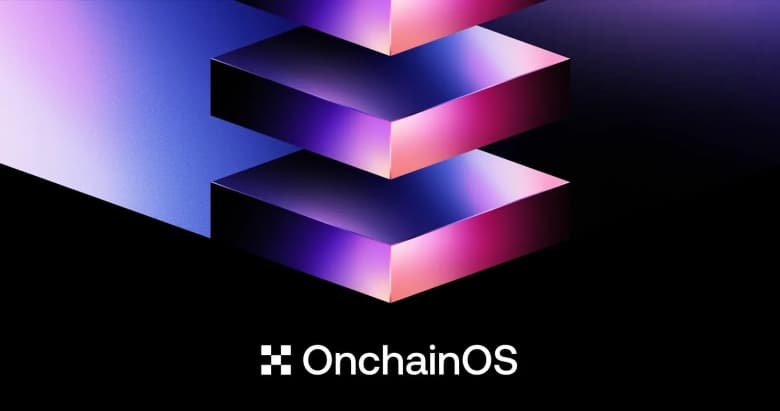
Artificial intelligence is increasingly shifting from analytical support tools to autonomous execution in digital asset markets. With the launch of its OKX AI OnchainOS layer, OKX is embedding AI directly into its onchain infrastructure, enabling agents to trade, execute payments, and operate across more than 60 blockchain networks without human intervention.
The move reflects a broader structural shift. AI agents are beginning to monitor liquidity, execute conditional trades, rebalance portfolios, and interact with smart contracts autonomously. But most blockchain infrastructure was designed for human users clicking buttons — not machines executing strategies at scale.
OKX’s latest integration positions OnchainOS as an execution environment built for that next phase.
Across crypto markets, AI integrations have largely focused on improving user experience — chat-based assistants, automated portfolio summaries, or trading suggestions.
The OKX AI OnchainOS approach is different.
Rather than layering AI onto an interface, OKX is embedding it into infrastructure that already operates at significant scale. OnchainOS processes more than 1.2 billion daily API calls and approximately $300 million in daily trading volume. The platform maintains sub-100 millisecond response times and 99.9% uptime.
Those figures are critical in the context of autonomous systems. AI agents interacting across multiple chains and decentralized exchanges require deterministic performance. Latency spikes or failed calls can disrupt automated strategies. Infrastructure reliability becomes foundational when execution is machine-driven.
With the new AI layer, OnchainOS expands beyond a developer toolkit into what can be described as a programmable execution environment.
According to OKX, AI agents using the system can:
The differentiator lies in composability. Instead of isolated features, the infrastructure allows agents to combine capabilities into complete workflows. An AI agent could monitor ETH price movements, evaluate liquidity depth, identify optimal routing across DEXs, handle token approvals, execute a swap, and confirm settlement — all programmatically
In that sense, AI shifts from advisory logic to operational execution.
The architecture behind OKX AI OnchainOS also supports multiple integration pathways. Developers can interact through natural-language AI Skills, connect directly via Model Context Protocol (MCP) to major AI frameworks and LLM applications, or use a RESTful Open API for full programmatic control.

Disclaimer of Warranty
The information provided in this article is for general informational purposes only. We make no warranties about the completeness, reliability, and accuracy of this information. Read full disclaimer
This layered access model suggests the platform is being positioned for both experimental AI applications and production-grade deployments.
As automated trading strategies and algorithmic liquidity management become more sophisticated, execution speed and reliability grow more important. Autonomous agents operating continuously across chains may generate higher transaction frequency, micro-arbitrage activity, and conditional payment flows.
In that environment, infrastructure — not just token listings — becomes a strategic differentiator.
As AI agents begin interacting more actively with onchain markets, the choice of settlement asset becomes increasingly relevant.
Volatile assets complicate automated treasury management and conditional execution. Stablecoins, by contrast, offer price predictability, deep liquidity pools, and cross-chain portability. They are already central to decentralized trading and payment flows.
If AI agents manage capital autonomously, stablecoins could naturally become their default unit of account.
However, stablecoins alone do not create machine-native markets. They require infrastructure capable of routing liquidity efficiently, abstracting gas complexity, managing approvals, and ensuring predictable execution.
In that context, OKX AI OnchainOS can be viewed as infrastructure that complements the growth of programmable money. It connects stablecoin liquidity to execution logic that autonomous systems can deploy at machine speed.
The launch of OKX AI OnchainOS signals more than a product update. It reflects a broader positioning shift within digital asset markets.
Stablecoins made money programmable. Smart contracts made agreements programmable. AI agents introduce the possibility of programmable capital allocation — systems that execute based on predefined logic and real-time data without human prompts.
If autonomous agents become sustained participants in crypto markets, the platforms enabling their execution may sit at the center of liquidity flows.
By embedding AI capabilities into infrastructure already handling billions of API interactions daily, OKX appears to be building with that possibility in mind.
Whether AI-driven execution becomes a dominant force remains uncertain. But as the line between software automation and financial infrastructure continues to blur, the race to provide machine-ready rails is clearly underway — and OKX has moved early to stake its position.




Editor's Picks

UAE Stablecoins: Why They Are Built to Travel, Not Stay Local

Walid Abou Zaki

Feb 28, 2026

8 min

The Central Bank of the UAE Clearing the Noise Around Article 62
Walid Abou Zaki
Feb 25, 2026
5 min

Europe’s Crypto Purge: Did Lithuania Just Kick Out Innovation — and is the UAE the Beneficiary?
Salma Naueihed
Feb 18, 2026
7 min
Read More Articles

In the Same Space

Ethereum Sets Sights on Becoming AI Infrastructure
News Desk
Mar 6, 2026
4 min
After a Decade of Work, Ethereum Finally Activates Smart Accounts
News Desk
Mar 2, 2026
2 min

OKX Valued at $25B After ICE Investment as Exchange Moves Toward Financial Infrastructure
Walid Abou Zaki
Mar 10, 2026
4 min
Solana ETFs Attract Institutional Investors While XRP Funds Lean Retail
News Desk
Mar 11, 2026
4 min

