Regulation & Policy
Share
The U.S. Securities and Exchange Commission (SEC) has issued new guidance aimed at clarifying how tokenized securities are treated under federal securities laws, reinforcing that assets issued or represented on blockchain networks remain firmly within the agency’s regulatory remit.
The guidance, published late Wednesday by the SEC’s Division of Corporation Finance, Division of Investment Management, and Division of Trading and Markets, makes clear that tokenization changes the format of a security—not its legal status. As a result, tokenized securities continue to carry the same registration, disclosure, and compliance obligations as their traditional counterparts.
“A tokenized security is a financial instrument enumerated in the definition of ‘security’ under the federal securities laws that is formatted as or represented by a crypto asset, where the record of ownership is maintained in whole or in part on or through one or more crypto networks,” the SEC wrote.
The SEC emphasized that moving securities onchain does not exempt issuers or intermediaries from existing legal requirements. Whether ownership records are maintained through traditional databases or blockchain-based systems, the underlying regulatory framework remains unchanged.
“Consequently, the only difference between a security issued in this manner and securities issued in traditional format is that instead of maintaining the master securityholder file through conventional, offchain database records, the issuer (or its agent) maintains the master securityholder file on one or more crypto networks, which functionally are onchain database records,” the agency said.
The guidance forms part of the SEC’s broader effort to bring clarity to the rapidly evolving digital asset landscape. In November, SEC Chair Paul Atkins indicated that the agency would work toward developing a formal “token taxonomy” to better distinguish between different classes of digital asset securities.
According to the SEC, tokenized securities broadly fall into two main categories: issuer-sponsored tokenized securities and third-party sponsored tokenized securities.
Regulatory Update

Disclaimer of Warranty
The information provided in this article is for general informational purposes only. We make no warranties about the completeness, reliability, and accuracy of this information. Read full disclaimer
In issuer-sponsored models, the issuing entity integrates blockchain technology directly into its ownership and transfer infrastructure. Onchain transactions represent actual transfers of the underlying security, with blockchain networks functioning as the official record of ownership.
By contrast, third-party sponsored tokenized securities involve a separate entity holding the underlying security in custody and issuing a tokenized representation or entitlement to investors.
“Under this model, the crypto asset represents the holder’s indirect interest in the underlying security via the security entitlement,” the SEC wrote. “The format in which the security entitlement is issued does not affect application of the federal securities laws.”
The SEC also outlined a third category involving synthetic or “linked” tokenized securities, where a party issues tokens that provide economic exposure to an underlying security without conferring ownership rights such as voting or dividends.
The agency noted that these instruments may resemble structured notes, equity-linked products, or security-based swaps—assets that are typically subject to stricter eligibility and compliance requirements under U.S. law.
While much of the guidance reiterates long-standing SEC positions, its timing is notable. Exchanges and financial platforms globally are accelerating efforts to offer tokenized securities, including initiatives such as Kraken’s xStocks, Robinhood’s Arbitrum-based tokenized equities, and the New York Stock Exchange’s recently announced plans to launch a platform for tokenized U.S. equities and ETFs, pending regulatory approval.
SEC Commissioner Hester Peirce, a senior figure within the agency’s crypto task force, has consistently maintained that “tokenized securities are still securities.” The latest guidance reinforces that stance, signaling regulatory continuity even as infrastructure and market models evolve.
Taken together, the message from the SEC is unambiguous: tokenization may modernize how securities are issued, recorded, and transferred—but it does not rewrite the rules governing them.


Editor's Picks

UAE Stablecoins: Why They Are Built to Travel, Not Stay Local

Walid Abou Zaki

Feb 28, 2026

8 min

The Central Bank of the UAE Clearing the Noise Around Article 62
Walid Abou Zaki
Feb 25, 2026
5 min
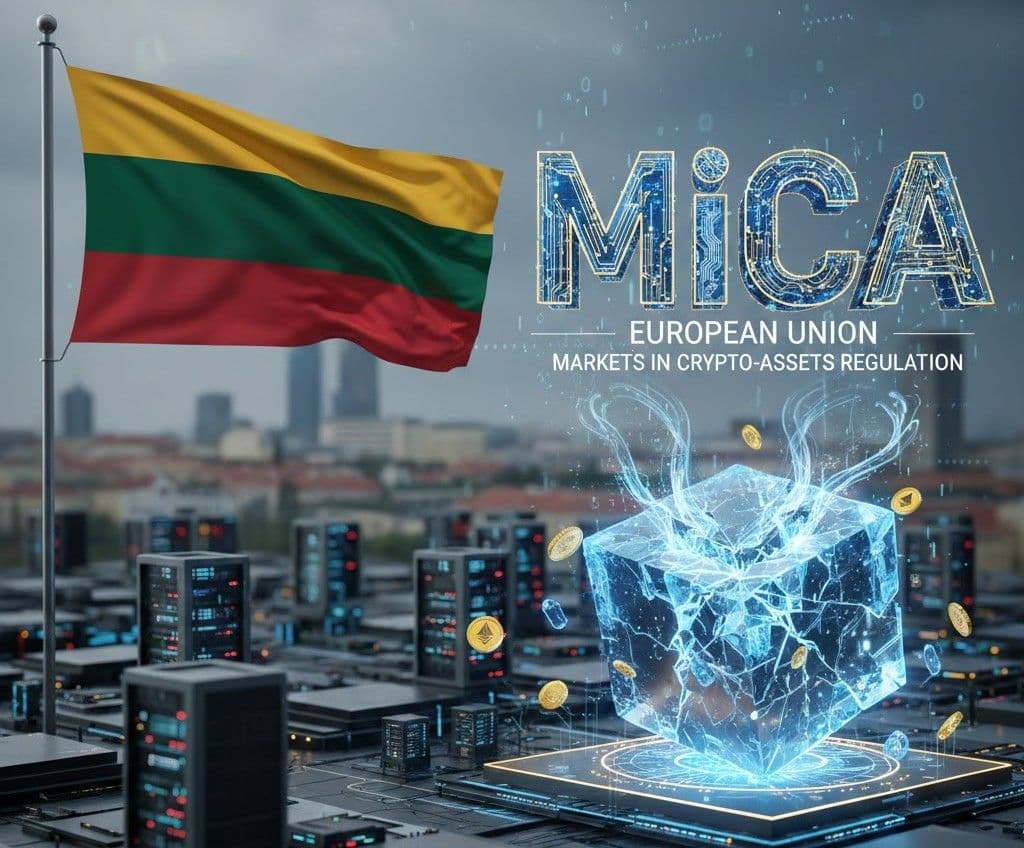
Europe’s Crypto Purge: Did Lithuania Just Kick Out Innovation — and is the UAE the Beneficiary?
Salma Naueihed
Feb 18, 2026
7 min
Read More Articles

In the Same Space
Trump on Stablecoin Yield Dispute: “Americans Should Earn More Money on Their Money” as Clarity Act Stalls
News Desk
Mar 4, 2026
3 min

Senate Housing Bill Adds Temporary CBDC Ban Through 2030
News Desk
Mar 3, 2026
2 min

SEC Approves WisdomTree’s Instant-Settlement Tokenized Money Market Fund
News Desk
Feb 25, 2026
2 min
SEC Appoints Chainlink’s Taylor Lindman to Lead Crypto Task Force
News Desk
Feb 25, 2026
2 min


