Research & Analysis
Share
A recent report by the UAE Financial Intelligence Unit (UAEFIU) addresses drug trafficking and money laundering in the UAE, focusing on the misuse of financial institutions in the growing trend of drug trafficking via social media platforms. It also highlights various observations regarding the potential use of virtual assets in these illicit activities.
The utilization of virtual assets in drug trafficking has become a prominent challenge worldwide. Approximately two-thirds of countries have identified drug trafficking as a significant precursor to money laundering, ranking it alongside corruption, fraud, and tax crimes, as reported by the Financial Action Task Force's 4th round of Mutual Evaluations. Organized crime groups annually generate billions of dollars through the illicit drug trade, and consequently, laundering the proceeds from drug trafficking involves a wide spectrum of techniques. These include cash smuggling, exploiting financial institutions, establishing shell companies, employing trade-based money laundering methods, and seeking the assistance of professional money launderers.
Furthermore, the rise of online drug trafficking has emerged as a notable global trend in recent years. The proliferation of the internet and the increasing prevalence of digital platforms, including dark web marketplaces, have provided opportunities for drug traffickers to conduct their illicit activities and launder their gains through innovative means. This has led to shorter, cost-effective, and more accessible drug supply chains.
The United Arab Emirates Financial Intelligence Unit (UAEFIU) identified a total of 2556 suspicious reports related to drug trafficking and money laundering during the period from April 1, 2020, to March 31, 2023. The Research and Strategic Analysis Section (RSAS) team conducted a thorough analysis of 60% of these reports, comprising 1395 suspicious transaction reports (STRs) and 151 suspicious activity reports (SARs), leading to 39 cases being shared with Law Enforcement Authorities (LEAs).
The key findings of the analysis encompass various typologies and risk indicators, necessitating risk mitigation measures:
Regarding the potential use of virtual assets in drug trafficking and money laundering, the RSAS team at UAE Financial Intelligence Unit conducted an examination of 200 suspicious reports submitted by Virtual Asset Service Providers (VASPs). The most frequently employed virtual currencies in these reported transactions included Bitcoin Cash (BCH), Bitcoin (BTC) wallet/Exchange, Ethereum (ETH), and Ripple (XRP). Most of these transactions involved relatively small amounts, typically in a few thousand AED equivalent.

Disclaimer of Warranty
The information provided in this article is for general informational purposes only. We make no warranties about the completeness, reliability, and accuracy of this information. Read full disclaimer
VASPs typically reported individuals when their transactions triggered alerts from risk screening platforms. These alerts were categorized into direct and indirect risk exposures, where direct exposure indicated a direct link to tainted wallets, while indirect exposure implied connections through multiple wallets or intermediaries, potentially for the purpose of obscuring the flow of virtual assets.
The report of the UAE Financial Intelligence Unit suggests a high likelihood that drug traffickers have leveraged digital platforms for their trading and money laundering activities, both directly and indirectly. However, it also acknowledges the possibility that some subjects may be transferring or receiving virtual assets without awareness of any criminal activity.
The examined sample of suspicious reports was primarily related to global dark web marketplaces that traded in various illicit items beyond drug trafficking. These marketplaces served as hubs for the sale of stolen identities, fraudulent materials, weapons, and other illegal goods and services, in addition to different drugs such as stimulants, cannabis, hash, drug paraphernalia, barbiturates, Ecstasy, and opioids.
It's worth noting that these marketplaces facilitated anonymous transactions, sometimes with the assistance of mixers, which disconnect the source and destination of virtual assets, further complicating the tracking of funds.
Common reasons for reporting by VASPs included the absence of adequate transaction documentation, unusual activity inconsistent with an account's normal behavior (especially sending funds to dark web markets), and inclusion of individuals/entities in international sanctions lists. Some of these dark web marketplaces specifically targeted customers within the Russian Federation's territories.
Ultimately, the UAE Financial intelligence unit suggests that while the examined sample showed indirect relevance to drug trading on dark webs, it remains inconclusive whether the individuals involved were indeed engaged in illicit drug trafficking or if drugs could be delivered to recipients in the UAE.



Editor's Picks
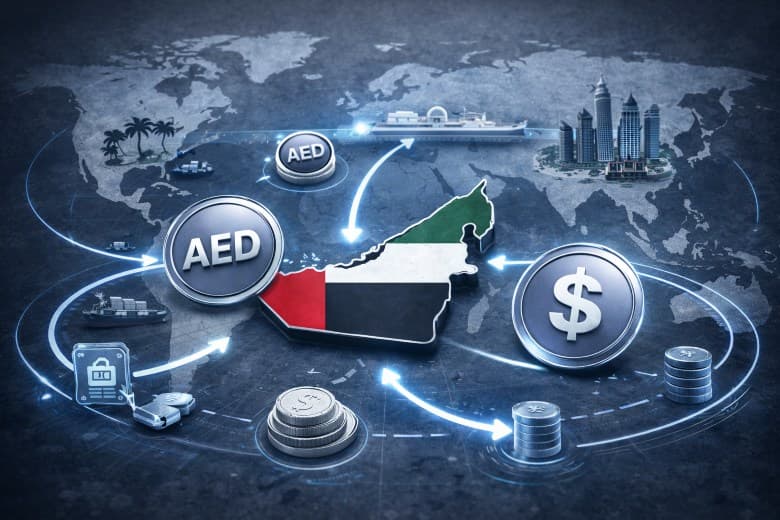
UAE Stablecoins: Why They Are Built to Travel, Not Stay Local

Walid Abou Zaki

Feb 28, 2026

8 min

The Central Bank of the UAE Clearing the Noise Around Article 62
Walid Abou Zaki
Feb 25, 2026
5 min

Europe’s Crypto Purge: Did Lithuania Just Kick Out Innovation — and is the UAE the Beneficiary?
Salma Naueihed
Feb 18, 2026
7 min
Read More Articles

In the Same Space
VARA Issues Alert Against MEXC Over Unlicensed Activity
News Desk
Mar 6, 2026
2 min
UAE Stablecoins: Why They Are Built to Travel, Not Stay Local
Walid Abou Zaki
Feb 28, 2026
8 min
OCC Faces Scrutiny from Elizabeth Warren Over Trump-Linked Crypto Bank Bid
News Desk
Feb 27, 2026
3 min

Morgan Stanley Expands Digital Asset Strategy with Crypto Trading and Custody Plans
News Desk
Feb 27, 2026
2 min