Regulation & Policy
Share
Digital transformation is disrupting businesses across all sectors, but some have been faster to adapt than others. The Financial Services Industry (FSI) has been notoriously slow to change, but is set to undergo unprecedented transformation in the coming months and years. The introduction of Open Banking in 2018, under both UK and EU law, will spark a major evolution in customer engagement, resulting in more accurate, more personalized financial advice.
Open Banking requires all major banks to make each person’s data available in a standard format so that it can be used by accredited third parties, with the customer’s permission. This major change in the way that banking works will enable consumers to use just one smartphone app to manage transaction across all their banks. It will also make it easier for comparison services to recommend banks and services based on the user’s financial data. It’s likely that banks in other countries will find themselves under pressure to follow the Open Banking standard in future.
For enterprise, emerging technologies such as 5G, AI, machine learning and shared ledgers will dramatically accelerate innovation in 2018. All of these technologies will help to transform the future of finance in the coming months, particularly shared ledgers, which could completely reinvent the banking sector as we know it.
A shared ledger, also sometimes known as a distributed ledger, is a database that keeps track of ownership, providing a permanent record of transactions that can’t be tampered with. What’s more, the ledger is validated by the network itself, and so needs no centralised body to oversee it. Blockchain is the most commonly known shared ledger as it forms the backbone for cryptocurrency Bitcoin. And while virtual currencies like Bitcoin may not be the future, blockchain almost certainly is.
The undisputed audit trail that blockchain technology provides could completely revolutionise a number of areas including fraud detection and tax collection, and could even be used for online voting in future. But nowhere is its potential more apparent than in the world of finance. While the banking sector has been slow to transform for the digital age, thanks largely to legacy systems and layers of antiquated paperwork, this technology could change it beyond all recognition, saving huge amounts of time and money. In fact, blockchain could save investment banks as much as $12 billion (£9.2 billion) a year, according to an Accenture report.

Disclaimer of Warranty
The information provided in this article is for general informational purposes only. We make no warranties about the completeness, reliability, and accuracy of this information. Read full disclaimer
Blockchain has two major advantages for banks – it enables them to save money by streamlining and it also speeds up transactions. This is particularly good news for trade finance transactions, traditionally not the fastest operators, but also relates to consumer banking. British bank Santander UK already uses blockchain technology to offer fast international payments via its smartphone app. What’s more, American Express recently partnered with Santander to offer blockchain-enabled cross-border payments via fintech start-up Ripple. Along with savings in time and money, blockchain could cut also financial fraud as many of the methods used by cybercriminals today are ruled obsolete by the new technology.
But blockchains aren’t limited to money transfers – they can store any kind of digital information, such as smart contracts. These could be incredibly useful across multiple industries that rely on financial transactions. For example, computer code could be included to carry out certain actions once a chosen set of criteria has been completed, such as paying an invoice when the work or product has been delivered. Blockchain technology can also be used to streamline identity verification.
Almost all global banks are already experimenting with Blockchain technology but it can also benefit businesses outside the financial services industry. Intel technology is being used by Oracle* to deliver a cloud-based blockchain service to its enterprise customers. The Oracle Blockchain Cloud Service is powered by Intel® Xeon® Scalable processors, which include features designed to enhance blockchain security and performance. “Intel’s silicon, software and security technologies can improve blockchain privacy, security and scalability,” says Doug Fisher, senior vice president and general manager of the Software and Services Group at Intel.
Intel is also working with Microsoft to build a new blockchain framework for businesses called the Coco Framework. It will integrate Intel® Software Guard Extensions (Intel® SGX) which offers extra levels of privacy and confidentiality by allowing transaction data to be stored in encrypted form, improving scalability. The new framework will also offer improved transaction speeds and will enable developers to create flexible shared ledgers that can be easily managed by businesses.
While blockchain is set to completely transform the financial sector, it’s inevitable that a completely new regulatory framework will be needed to oversee widespread adoption of the technology. Its success will also rely on multiple companies agreeing on a common set of rules, with privacy and security of data being primary concerns. Though it may take some time, blockchain is set to completely transform the financial sector and will also disrupt other industries including healthcare, manufacturing and retail. To stay ahead of the competition, it’s vital for businesses to consider how blockchain technology could transform their operations and how it might be integrated into their digital strategy.



Editor's Picks

UAE Stablecoins: Why They Are Built to Travel, Not Stay Local

Walid Abou Zaki

Feb 28, 2026

8 min

The Central Bank of the UAE Clearing the Noise Around Article 62
Walid Abou Zaki
Feb 25, 2026
5 min
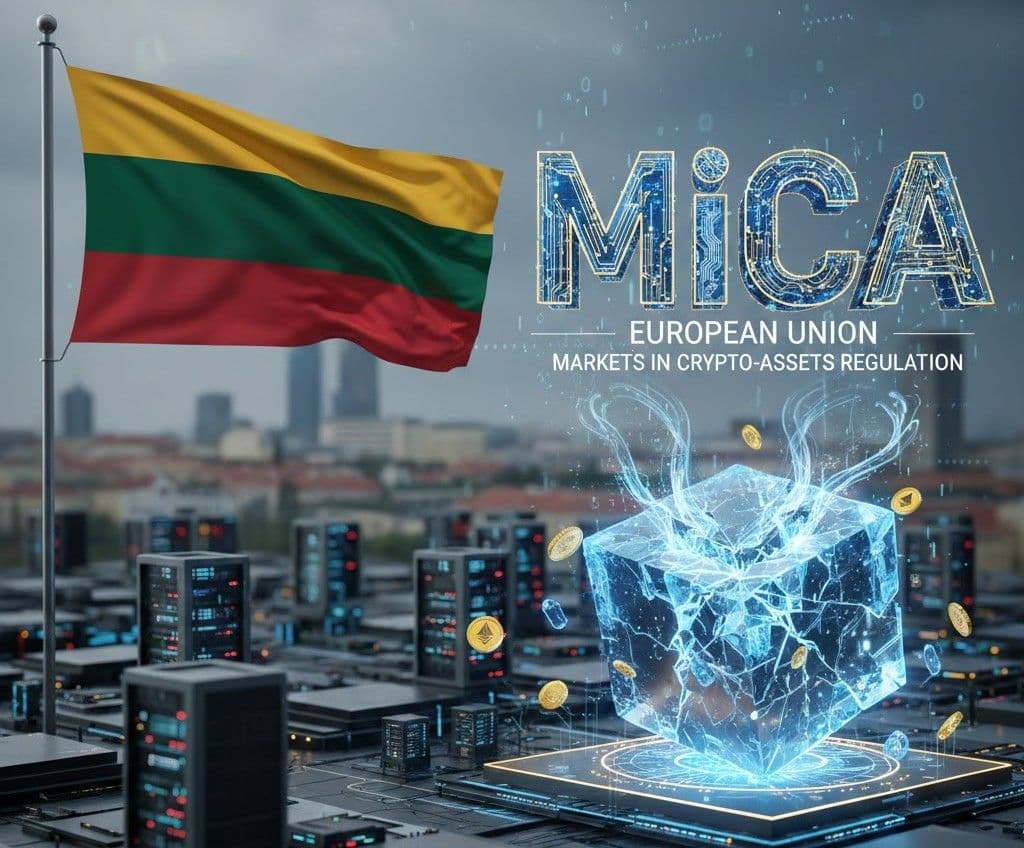
Europe’s Crypto Purge: Did Lithuania Just Kick Out Innovation — and is the UAE the Beneficiary?
Salma Naueihed
Feb 18, 2026
7 min
Read More Articles

In the Same Space

U.S. Senators Negotiate Stablecoin Rewards Compromise in Market Structure Bill
News Desk
Mar 11, 2026
4 min

US Banks Weigh Lawsuit Over Crypto Trust Charters
News Desk
Mar 10, 2026
3 min

U.S. Congress Considers Granting Crypto Exchanges Authority to Freeze Suspicious Assets
News Desk
Mar 9, 2026
4 min

US Federal Court Dismisses All Claims Against Binance in Anti-Terrorism Lawsuit
News Desk
Mar 9, 2026
3 min