Regulation & Policy
Share
The U.S. Department of the Treasury’s Office of Foreign Assets Control (OFAC) has sanctioned two individuals and one entity linked to a network that launders millions of dollars in illicit funds generated by Democratic People’s Republic of Korea (DPRK) information technology (IT) workers and cybercrime, all in support of the DPRK government.
Lu Huaying and Zhang Jian, both based in the United Arab Emirates (UAE), worked through a UAE-based front company to facilitate money laundering and cryptocurrency conversion services that funneled the illicit proceeds back to Pyongyang. This network is led by Sim Hyon Sop, a PRC-based banking representative for the DPRK, who orchestrates money laundering schemes to finance the regime’s activities.
These sanctions are part of ongoing efforts to disrupt the DPRK’s money laundering operations, which fund the regime’s unlawful weapons of mass destruction (WMD) and ballistic missile programs. The U.S. Treasury Department is working closely with the UAE government to target these financial networks.
“As the DPRK continues to use complex criminal schemes to fund its WMD and ballistic missile programs—including through the exploitation of digital assets—Treasury remains focused on disrupting the networks that facilitate this flow of funds to the regime,” said Acting Under Secretary of the Treasury for Terrorism and Financial Intelligence Bradley T. Smith. “The United States, along with the UAE and our other partners, will continue to target the financial networks that enable the Kim regime’s destabilizing activities.”
The DPRK continues to use proxies and agents to access the international financial system, including fraudulent IT work, digital asset thefts, and money laundering, all aimed at supporting its WMD and ballistic missile programs. These illicit activities contribute to the DPRK’s destabilizing efforts, which now also extend into Europe as Pyongyang increases military cooperation with Russia.
Sim Hyon Sop, a representative of DPRK’s Korea Kwangson Banking Corp (KKBC), is one such agent. According to the Financial Crimes Enforcement Network, representatives like Sim orchestrate money laundering schemes and set up shell companies to move and disguise illicit funds, ultimately financing DPRK’s WMD and missile programs. OFAC previously sanctioned both Sim and KKBC under Executive Order (E.O.) 13382, which targets proliferators of WMD. KKBC is a state-run DPRK entity listed on the United Nations Security Council 1718 (DPRK) Sanctions List. Operating from China, Sim coordinates extensive money laundering schemes, often involving digital assets, to funnel funds back to the DPRK.

Disclaimer of Warranty
The information provided in this article is for general informational purposes only. We make no warranties about the completeness, reliability, and accuracy of this information. Read full disclaimer
From early 2022 until September 2023, Lu Huaying, a UAE-based PRC national, converted cryptocurrency derived from DPRK revenue-generation projects into fiat cash on behalf of Sim Hyon Sop. Lu laundered several million dollars through cryptocurrency cash-outs and money mules, with the funds used to purchase products and services destined for the DPRK or its proxies.
Between late 2022 and early 2023, another UAE-based PRC national, Zhang Jian, also helped facilitate the exchange of fiat currency for Sim. Zhang has also acted as a courier for Sim Hyon Sop.
OFAC is sanctioning both Lu Huaying and Zhang Jian for acting on behalf of Sim Hyon Sop, whose property and interests are blocked under E.O. 13382.
As a result of these actions, all property and interests belonging to the sanctioned individuals and entities in the U.S. or under the control of U.S. persons are blocked and must be reported to OFAC. Any entity that is 50% or more owned, directly or indirectly, by the sanctioned individuals is also blocked. Unless authorized by a specific license issued by OFAC, U.S. persons are prohibited from engaging in any transactions involving the property of the designated persons.
Additionally, financial institutions and other parties engaging in certain transactions with the sanctioned individuals and entities may face sanctions or enforcement actions. This includes prohibiting the provision of funds, goods, or services to or from any designated person.
Non-U.S. persons are also prohibited from causing U.S. persons to violate sanctions or engaging in activities that circumvent U.S. sanctions. OFAC’s Economic Sanctions Enforcement Guidelines provide further details on how sanctions violations are enforced.


Editor's Picks
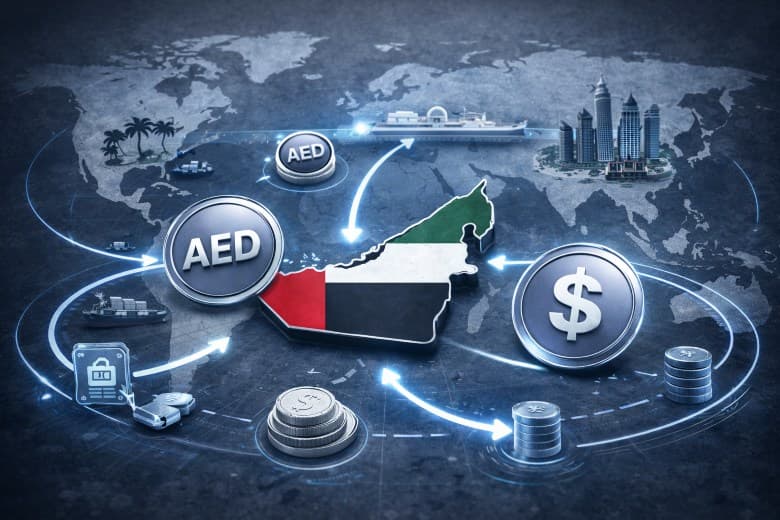
UAE Stablecoins: Why They Are Built to Travel, Not Stay Local

Walid Abou Zaki

Feb 28, 2026

8 min

The Central Bank of the UAE Clearing the Noise Around Article 62
Walid Abou Zaki
Feb 25, 2026
5 min
Europe’s Crypto Purge: Did Lithuania Just Kick Out Innovation — and is the UAE the Beneficiary?
Salma Naueihed
Feb 18, 2026
7 min
Read More Articles

In the Same Space
UAE Stablecoins: Why They Are Built to Travel, Not Stay Local
Walid Abou Zaki
Feb 28, 2026
8 min

Dubai Taxi Eyes Crypto Gateway Amid UAE Stablecoin Push
News Desk
Feb 26, 2026
2 min
SEC and CFTC Sign Coordination Pact to Align Crypto and Financial Market Oversight
News Desk
Mar 12, 2026
4 min

U.S. Senators Negotiate Stablecoin Rewards Compromise in Market Structure Bill
News Desk
Mar 11, 2026
4 min